


The cosmetics market is constantly being flooded with new products that attract consumers with their fragrances, packaging and brand promises. You can find plenty of reviews online on forums, skincare groups, beauty blogs and influencers’ channels. As a result, our shelves often end up overflowing with yet another cream or serum.
When starting a journey towards proper, conscious skincare, many people make a fundamental mistake – using too many products. In this case, less is often more. An excessive number of ingredients and active substances can lead to skin issues or irritation. So what should you keep in mind
- Start by introducing one basic product at a time into your skincare routine: a makeup remover (if you wear makeup or SPF daily), a cleanser such as a gel or foam, a toner or hydrosol (unless your cleanser has a physiological pH, in which case toning is not necessary), a daytime sunscreen, an eye cream and a night cream. Depending on your skin type, you may also introduce a serum, initially used only a few times per week.
- Always introduce new products one at a time, not all at once. Otherwise, it will be difficult to determine how your skin reacts to a specific product.
- Opt for gentle exfoliation using an enzymatic or fine-grain scrub (if your skin is not sensitive and has no active inflammation), no more than once a week. Exfoliation is an important step, but it should not be overdone. Excessive or aggressive exfoliation can damage the skin’s protective barrier, making it more sensitive, irritated and problematic.
- Dry your face using a disposable towel. Traditional towels, if not washed frequently, can accumulate dead skin cells. Combined with bathroom humidity, they can become a breeding ground for bacteria.
Remember that the skincare products you should use depend primarily on your current skin needs and skin type. If you are unsure what is best for you, consult a skincare professional.
How to determine your skin type?
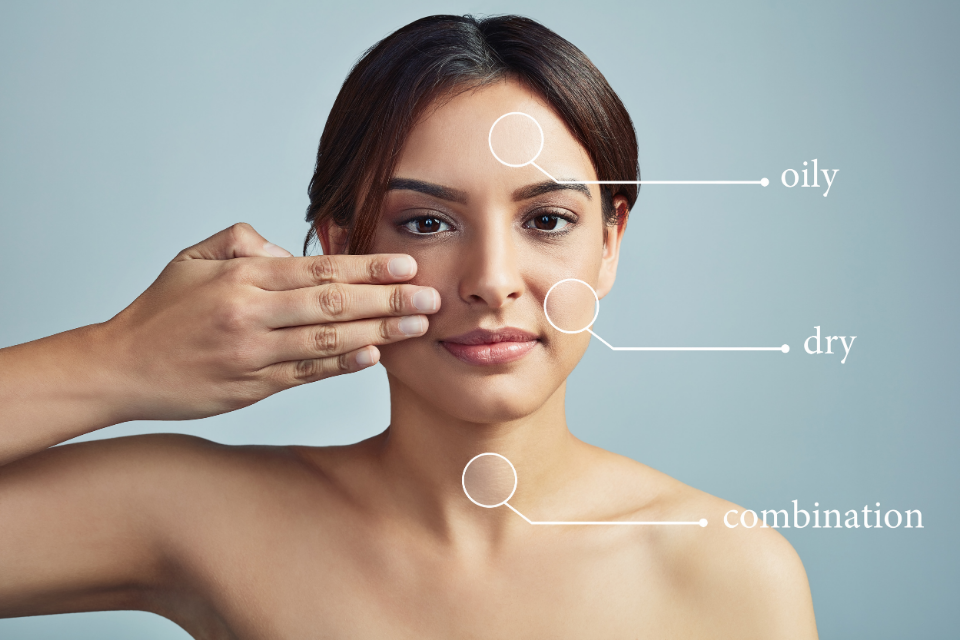
When starting a skincare journey, many people ask themselves a basic question – what is my skin type? The answer is not always as simple as it seems. Skin changes throughout life, and its current condition can be influenced by many factors such as skincare, diet or medication.
Normal skin is now quite rare in adults and is most commonly seen in children.
Dry skin is characterised by a feeling of tightness after cleansing. It often appears rough, dull, tight and thin, and may flake. It does not produce excess oil in the T-zone (forehead, nose, chin). Wrinkles also tend to appear earlier on dry skin.
Oily skin is thicker than dry skin and tends to show fewer wrinkles. It is characterised by excessive sebum production, resulting in shine across most of the face. Enlarged pores are usually visible, and the skin is more prone to blackheads.
Combination skin has features of both dry and oily skin. Excess sebum is usually most noticeable in the T-zone – the forehead, nose and chin.
In addition to skin types, we also distinguish skin conditions. Skin can be dehydrated, sensitive, vascular, have a weakened hydrolipid barrier or be acne-prone. These conditions can occur alongside any skin type, although acne is most commonly associated with oily skin.
When determining your skin type and condition, it is also important to consider your previous skincare routine. For example, excess sebum production may result from unsuitable or overly harsh products and does not necessarily mean you have oily skin. When in doubt, it is best to consult a skincare specialist or dermatologist.
Author:
Diana Bojko, MSc in Dietetics and Cosmetology
Owner of the Naturale clinic

